

understand.
Adapt.
Run the pause.
Perimenopause changes how your body responds to training. The Reset explains what's actually happening — and exactly what to do differently.
WHAT YOU NEED TO HEAR
THE
PART
MOST
PEOPLE
SKIP
PAST.
Here is what the wellness industry will not tell you about perimenopause and running: most of what is circulating is either fear-based, financially motivated, or both.
The physiological changes are real. Estrogen and progesterone affect everything from cardiovascular output to sleep quality to how your muscles recover after hard efforts. If your easy runs feel harder than they used to, if your heart rate is spiking at paces that never bothered you before, if you are sleeping eight hours and waking up wrecked — that is not in your head. It is your hormonal environment changing how your body responds to training load.
What often goes unsaid is that these changes are not entirely foreign to any runner who has been at this for a while. The gradual shifts in recovery time, aerobic ceiling, and fueling needs that come with aging in general — perimenopause accelerates and intensifies them. That does not make them easier to navigate, but it does make them less mysterious. Runners adapt to a changing physiology all the time. This is a more acute version of something the body already knows how to work with. The difference is that the rate of change is faster, and the standard training advice — which was never written with perimenopausal women in mind — does not account for it.
What is not solvable is running harder into a body that needs a different kind of work entirely.
The woman navigating this is usually also managing a career, relationships, kids who still need things from her, and in many cases parents who are starting to need things from her too. The mental load is not incidental to the training problem. It is part of it. Her body does not care whether the stress came from a hard track workout or a hard week. Telling that woman to push harder is not a training philosophy. It is a failure to read the situation.
The gap is not motivation. It is not even fitness. It is information — specifically, the kind that sits at the intersection of endurance training and hormonal physiology and has been largely ignored by both fields. Run The Pause closes that gap.

ABOUT DR. KATE
The DPT
who's
running
through
it too.
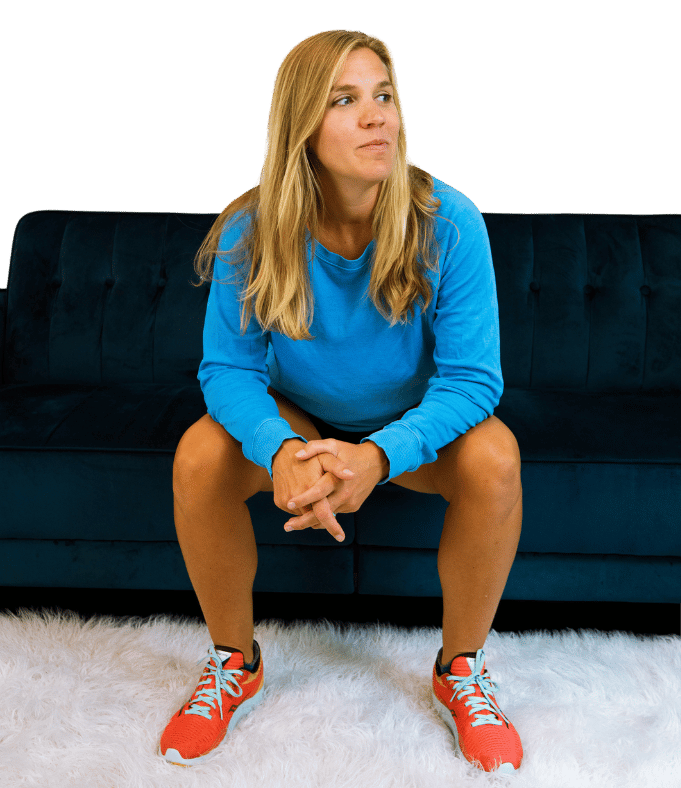
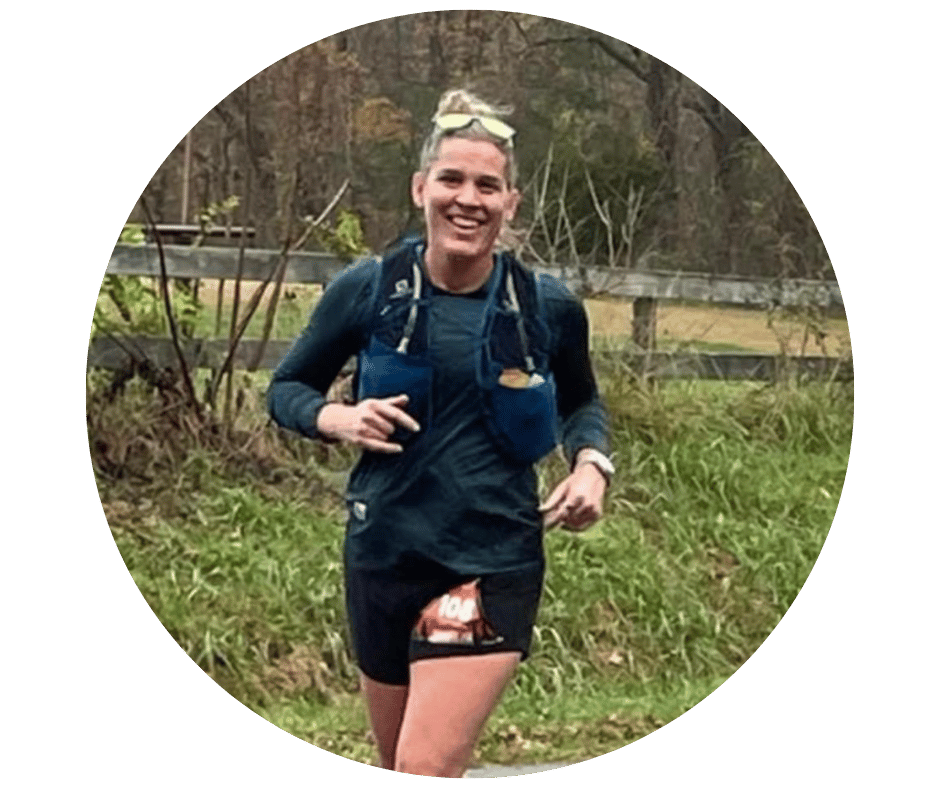
I'm Dr. Kate James, a Doctor of Physical Therapy, running coach, and former Assistant Professor of Physical Therapy. I have spent 17 years working with endurance athletes — and I am currently navigating perimenopause myself.
I built Run The Pause because I kept seeing the same pattern in my clinical practice: capable, committed women hitting perimenopause and suddenly feeling like strangers in their own bodies. The information available to them was either clinical and inaccessible or commercial and unreliable. As someone who spent years teaching in a DPT program, I knew the research existed. It just was not reaching the people who needed it most.
None of that is good enough. You have worked too hard for your running to hand it over to a hormone fluctuation. What you need is someone who understands the physiology, has lived the reality, and can tell you what to actually do about it.
WORK WITH ME
Start with The Reset.
Most women start here. It is the fastest way to understand what is actually happening in your body — and whether working together makes sense. Everything else follows from that foundation.
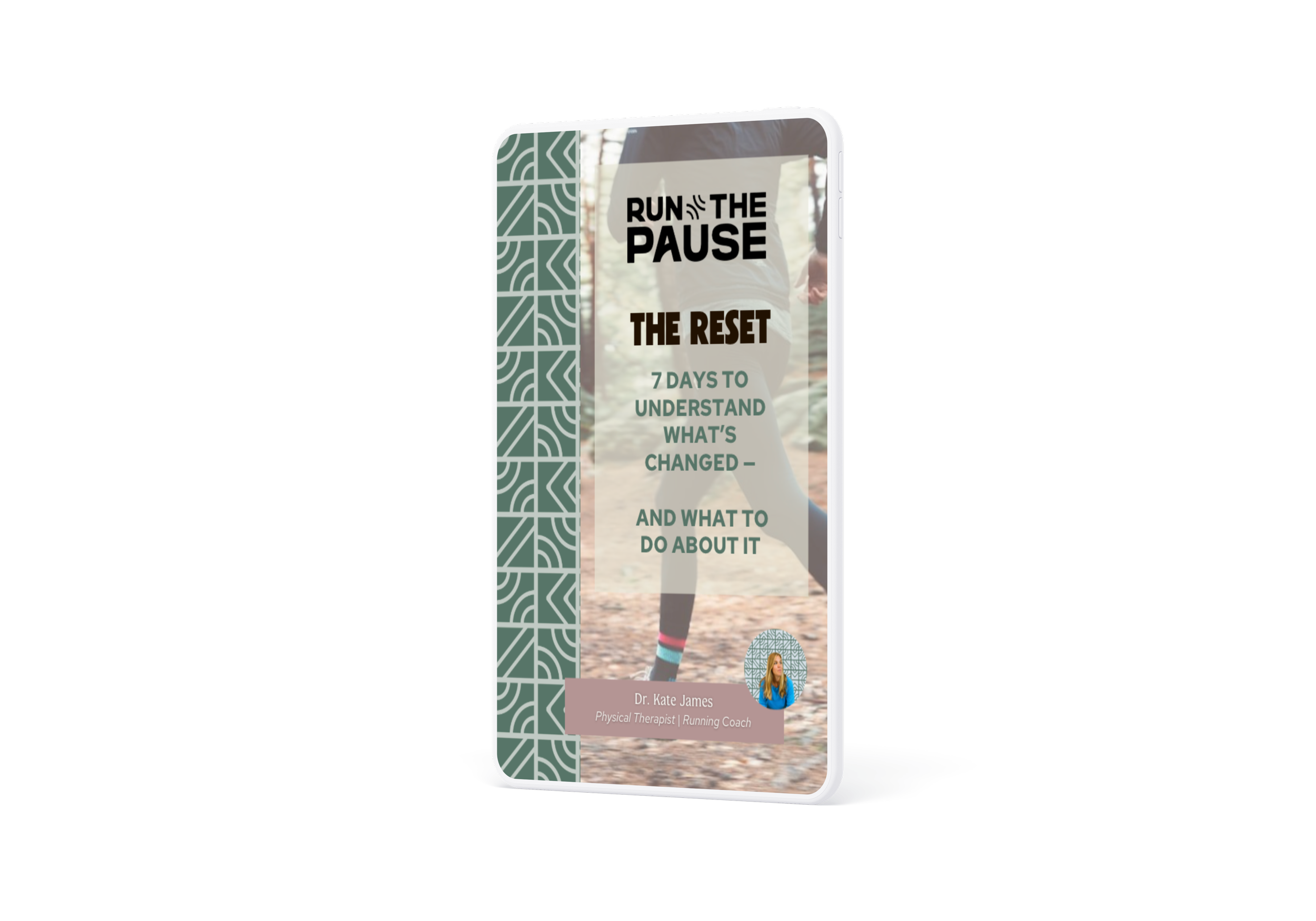
A video and guide built on the research, not the noise. Explains exactly what is happening hormonally and walks you through the first training adjustments worth making. The place to start if you want to understand before you act.
Map
A 60-minute consult built around your data and symptoms. You leave with a written training plan specific to your physiology. Limited spots available each month.
Coaching
Weekly plan adjustments, biweekly check-ins, and data review. Clinical-grade support for the runner in it for the long haul.

from runners who’ve worked with dr. kate
What changes when you have
the right information.
She does not do quick fixes. She takes her time, uses all her resources, and gets to the root of the issue. I have been a patient for over a year and have achieved more than I ever imagined.

I went to Dr. Kate specifically because I know she knows runners — she would work with me instead of suggesting I just stop running. I am grateful to have found someone who will actually listen.
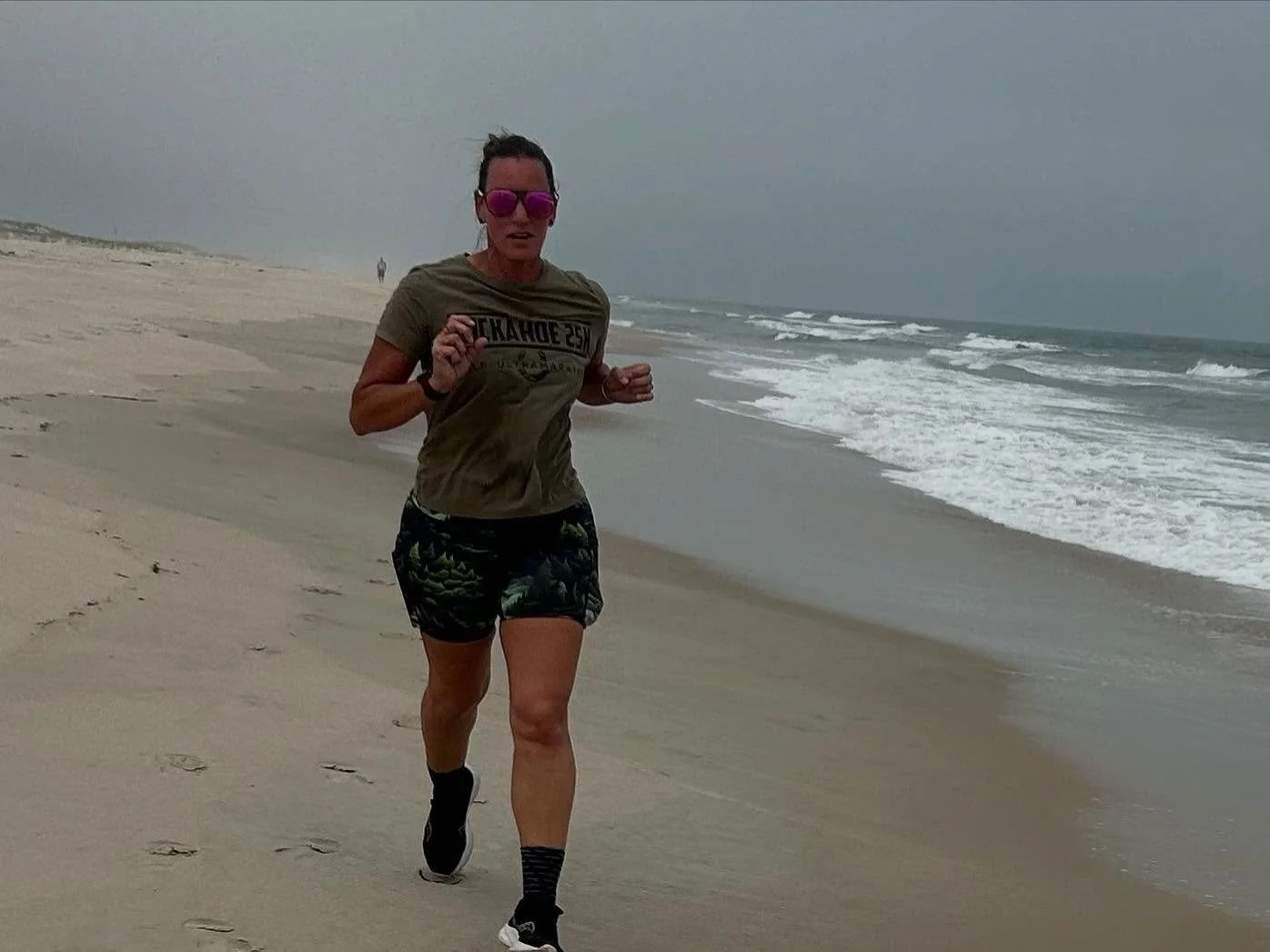
Dr. Kate diagnosed the issue, gave me steps to work through the pain, and eight weeks later I am pain free. The run analysis was eye-opening. She knew exactly what to look for. Working with her is the best thing I've done for my running.